A detailed study of the British Trade Dollar has earned Eric Brothers a top honor from the Numismatic Literary Guild, highlighting the coin's role in international commerce and the complexities of currency export in the British Empire
Recognition from the Numismatic Literary Guild rarely lands on articles that dissect the mechanics of a single coin, but Eric Brothers has achieved just that. His in-depth analysis of the British Trade Dollar, published in the Winter 2025 issue of ANS Magazine, has secured the NLG's award for best writing in the "World Coins (1801 to Date)" category. The decision signals a renewed interest in the global movement of coins and the economic forces that shaped their journeys.
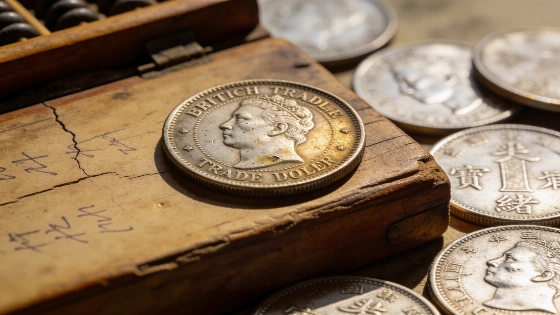
Brothers' article, "The British Trade Dollar: Commercial Coin of the Empire," does more than recount the coin's design or mintage. It reconstructs the financial pressures and policy decisions that led the British Empire to create a silver dollar specifically for export to China and East Asia. The piece traces how the coin became a tool for facilitating trade in regions where local acceptance of British currency was limited, and how its circulation was marked by the distinctive chopmarks applied by Chinese merchants to verify authenticity.
Export Coins and Global Currency Flows
The British Trade Dollar was not an isolated experiment. Brothers' research places it within a broader pattern of Western powers issuing coins for overseas markets, often to overcome barriers to trade or to compete with rival currencies. The article details how the British Trade Dollar, minted from 1895 to 1935, was designed to match the weight and silver content of the Mexican peso, which dominated Asian trade at the time. This strategic alignment was intended to ensure acceptance among Chinese merchants and to secure a foothold for British commercial interests in the region.
According to ANS Magazine, the British Trade Dollar's export was part of a larger trend in which coins from the United States and other countries were also shipped to China, where they were routinely chopmarked. These marks, far from being mere graffiti, served as a decentralized authentication system in a market wary of counterfeits and debased coins. Brothers' work highlights how these practices shaped the physical and economic landscape of currency in East Asia during the late nineteenth and early twentieth centuries.
Long-Term Impact and Recognition
Eric Brothers is no newcomer to numismatic research. With over two decades of published work, his byline has appeared in Numismatic News, Palm Beach Coin News, CDN Monthly Newsletter, Financial History, Coins, The Numismatist, and multiple editions of Whitman Publishers' A Guide Book of United States Coins. His previous accolades include the American Numismatic Association's First Place Heath Literary Award for his investigation into Franklin Peale's controversial tenure at the U.S. Mint. Brothers' consistent focus on coins that crossed borders-especially those marked by international trade-has made him a recognized authority on the subject.
In the Winter 2025 article, Brothers provides concrete figures: the British Trade Dollar was minted in three locations-Bombay, Calcutta, and Hong Kong-with total production exceeding 250 million coins over four decades. The coin's silver content was set at 26.95 grams, closely mirroring the Mexican peso's specifications. These details underscore the deliberate engineering behind the coin's creation and its intended role in the competitive landscape of Asian commerce.
Institutional Context and Ongoing Research
Brothers' membership in organizations such as the American Numismatic Society, the Palm Beach Coin Club, the Numismatic Literary Guild, the Chopmark Collectors Club, and the American Numismatic Association reflects a deep engagement with both the scholarly and collector communities. His ongoing research continues to illuminate the ways in which coins functioned as instruments of policy, commerce, and cultural exchange.
The British Trade Dollar's story is a reminder that currency is not just a medium of exchange but a product of negotiation between issuing authorities, merchants, and end users. The coin's journey from British mints to Chinese markets, and its transformation through chopmarking, illustrates the complex interplay between official policy and practical acceptance in international trade.
Export coins like the British Trade Dollar reveal how monetary authorities adapted to the realities of global commerce. By matching the specifications of trusted foreign coins and accepting the local practice of chopmarking, the British Empire acknowledged that currency legitimacy depended as much on merchant confidence as on official decree. This dynamic remains relevant today, as modern payment systems and digital currencies confront similar challenges of trust, interoperability, and acceptance across borders.